As a maker educator, our job is to nudge students toward the possibilities by developing a maker mindset in all of our students. One way I attempt to do that is by cultivating a culture of creativity in the library and letting students play to learn (and sometimes re-learn to play!)
We want our students tinkering. But sometimes, the older the students are, the more difficult this becomes because they’ve fallen out of the habit of playing and what Seymour Papert calls “hard fun.” I thought a lot about this idea when I wrote the “Librarian’s Guide to littleBits” last year. I interviewed different librarians in the field on their feelings about “Tinkering vs Guided Learning” and asked each librarian how they facilitated both types of learning in their libraries. Across the board, we all discussed the value in libraries instituting open makerspace time and guided project time (workshops, activities, etc). Plus, there was an agreement that a maker facilitates things in a very hands-off way compared to normal library programming. Instead of giving answers, a maker facilitator nudges makers to think of their own ideas and solutions. A maker facilitator also lets students choose the way they want their project to end.
Creating a culture of creativity and nudging students toward tinkering are just a few of the reasons I began hosting maker workshops at my own library makerspace. Sometimes these workshops introduce my students to new skills. I host “hands-on” play sessions at my maker professional development too. Teachers learn to create something and then I attempt to nudge them toward all of the possibilities of a maker tool or material. For example, read this reflection from one of my maker participants from a recent workshop. When she needed help, I offered her tips for debugging why her scribblebot wasn’t working instead of giving her direct instructions for how to make it work. I asked her to try a few things and gave her a few ideas to try. By doing this, I’d indirectly taught her that the teacher doesn’t always have the answers (or maybe I should say give the answers…). She emailed me a few weeks later to tell me (and her fellow librarians) that she realized that even though not having answers can be a scary thing, it is a good thing too. Sometimes, we need to let the students have all of the answers. Imagine how empowering that must be for students? To figure out how to debug a problem when the teacher can not? Now she and her students are taking scribblebots MUCH further than the concepts introduced in my initial playful workshop.
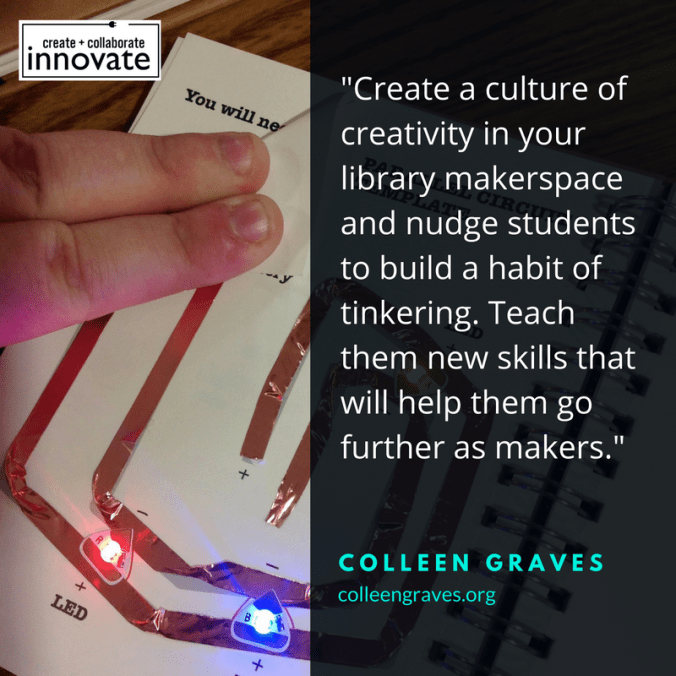
And THAT is why I think it’s important to have some guided projects in a library makerspace. Giving students new skills helps them go further as makers.
To showcase this with a specific anecdote of a student’s workshop makerspace mashup, take this tale from Lamar Library. Two years ago, I hosted three different workshops at the beginning of the school year:
- A student-led origami workshop
- A teacher -led light up origami workshop with a simple circuit LED
- A quick propulsion Bristlebot workshop. Students made simple robots with a toothbrush head and pager motor.
Students were allowed to keep all of these projects because they were low cost and the bristlebot kits were purchased with a grant.
Then this happened….
One of my students took the concepts from all three workshops and made this awesome robot paper circuit origami thing….
(Thank you Facebook memories for reminding me of this quirky creation!)
Why did he do that? Because a workshop or a project isn’t the end. It’s just the beginning of an exploration of the “vast possibilities” of a skill, of a material, or of an idea. I’m basing this wording and concept of “exploring the vast possibilities of student ideas” on my talks with Jay Silver, Amos Blanton, Ryan Jenkins, and Patrick Benfield during my research for Challenge-Based Learning and mashing it up a bit with my own ideas. These mash-ups from student-led ideas and the learning that it reflects are at the heart of making.
If you are interested in reading more about projects and workshops, read this article “The Value of Guided Projects in a Makerspace” from Diana Rendina. (We also go into depth about a lot of this post’s concepts in our book scheduled to be released in the spring.)
What type of makerspace mashup fun have you seen in your own students? What type of things have they made by taking a concept further?

 Petite Texan: Pack, Pedal, Paddle